


A certificate of analysis is a lab report from an independent testing facility stating what a specific batch of product contains. Every hemp product worth buying has one. Almost nobody reads them, which is exactly what low-quality brands rely on.
Reading one takes about two minutes once you know which lines matter. Here’s the scan.
The seven-line check
Run these in order. If any one fails, stop there.
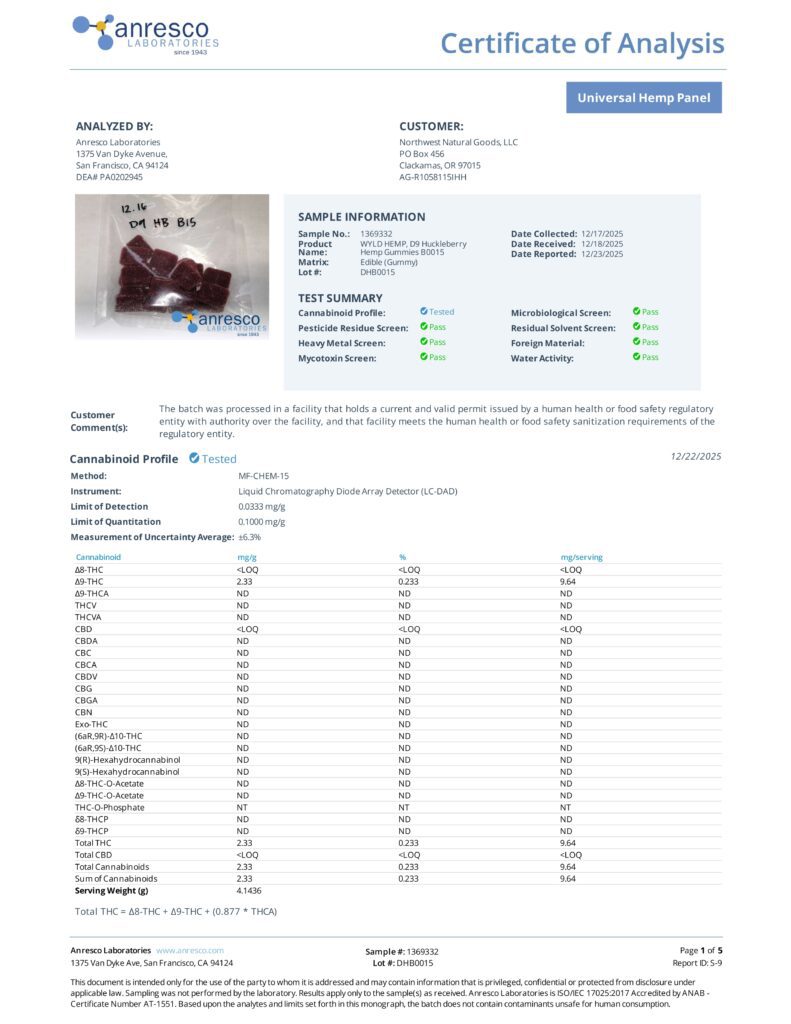
- The batch number matches your package. A COA is issued for one batch, not one product line. Compare the number on the report against the number printed on your box. If they don’t match, ask the seller for the report that does.
- The lab is independent and accredited. Look for ISO 17025. You can verify any lab’s accreditation on the public ANAB or A2LA registries.
- The test date is recent. Within twelve months is the working standard.
- The cannabinoid content matches the label. If the box claims 10mg per gummy, the report should say so.
- Total THC is calculated, not just Delta-9. More on this below — it’s the line most people miss.
- There’s a terpene panel. Not a safety issue, but its absence usually means the brand paid for the cheapest test available.
- All four safety panels pass. Pesticides, heavy metals, residual solvents, microbials.
The cannabinoid table
This is the core of the report: every cannabinoid detected, with its measured concentration. THCA, Delta-9 THC, CBD, CBG, CBN and whatever else is present.
Two numbers usually sit at the bottom, and they mean different things:
Total cannabinoids adds up everything detected. It’s the biggest number on the page and the one brands like to print on packaging. It is not a THC figure.
Total THC is the one that matters, and it isn’t simply the Delta-9 line.
What the 0.877 is doing there
THCA isn’t intoxicating on its own. Apply heat — a lighter, a coil, an oven — and it converts to Delta-9 THC. It also loses a bit of weight in the process, because a carboxyl group breaks off.
That weight loss is where 0.877 comes from. It’s the ratio between the two molecules.
So the standard calculation is:
Total THC = Delta-9 THC + (0.877 × THCA)
Some labs use a wider version that adds Delta-8 into the same total. Worth noticing which one your report uses, because the two produce different numbers on any product containing Delta-8.
Run the numbers on a THCA flower COA and the difference is dramatic. A sample reading 0.167% Delta-9 and 25% THCA comes out around 22% total THC — not 0.167%.
This matters because standards differ on which figure they use. Some look only at Delta-9. Others use total THC. A product can sit comfortably under one measure and well over the other, and the COA is where you can see both.
The four safety panels
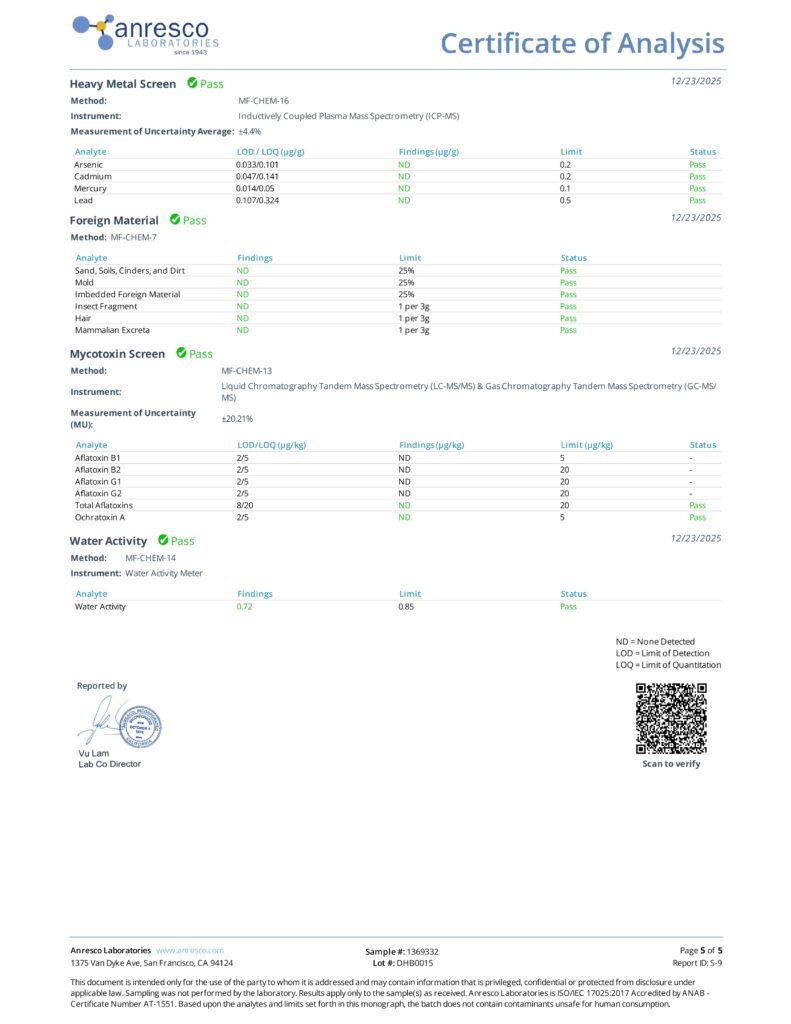
Cannabis is a bioaccumulator — it pulls whatever is in its soil and air into the plant. Contaminant screening isn’t a formality.
Pesticides. Thirty to sixty compounds on a full panel. Everything should read Not Detected or below the action limit.
Heavy metals. Lead, arsenic, cadmium, mercury. Worth extra attention on any product involving hydrogenation, like HHC, since metal catalysts are used in that process.
Residual solvents. Leftovers from extraction. Note that rosin is solventless by definition — pressed with heat and pressure alone — so this panel should be clean by default on rosin products. On anything solvent-extracted, read it carefully.
Microbials. Mold, yeast, E. coli, salmonella. Relevant to flower and pre-rolls in particular, where storage conditions matter.
A report showing potency and nothing else is incomplete. Potency-only testing is cheaper, and some brands stop there.
Red flags
- Batch number doesn’t match. The single most common problem, and the easiest to check.
- The lab isn’t in the accreditation registries. An unaccredited lab produces an unverifiable result.
- Potency only, no contaminant panels. Half a report.
- Every value reads zero across every category. Real products show small natural variation. Perfect zeros everywhere are a reason to look closer, not to relax.
- The QR code goes to a homepage. It should land on the actual report, not a marketing page.
- Measured cannabinoid content well under the label claim. You’re paying for something you’re not getting.
Where to find ours
We publish the lab reports for what we carry on our COA page, organized by product category. You can pull the report for anything in the catalog before you order rather than after it arrives.
This is also the practical answer to the counterfeit problem we covered in our disposables guide. A convincing fake can copy packaging. It can’t produce a batch-matched report from an accredited lab.
Frequently asked questions
What is a COA?
A certificate of analysis — a lab report from an independent third-party facility stating the measured contents of a specific product batch, including cannabinoid levels and contaminant screening.
What does 0.877 mean on a COA?
It’s the conversion ratio between THCA and Delta-9 THC. THCA loses weight when heat converts it, and 0.877 accounts for that. Total THC is calculated as Delta-9 plus 0.877 times THCA.
What’s the difference between total THC and total cannabinoids?
Total cannabinoids adds every compound detected, including CBD and CBG. Total THC counts only Delta-9 and the THC that THCA would produce. They are very different numbers.
How do I know a COA is real?
Check that the batch number matches your package, that the lab is ISO 17025 accredited and listed in the ANAB or A2LA registries, and that the test date is within twelve months.
What should the safety panels say?
Not Detected, or Pass, or a value below the stated action limit, on pesticides, heavy metals, residual solvents and microbials.
Does every product need a COA?
Every hemp product you buy should have one tied to its batch. If a seller can’t produce it, that’s your answer.
This article is for general information and is not legal or medical advice. Hemp regulations vary by state and change frequently.